


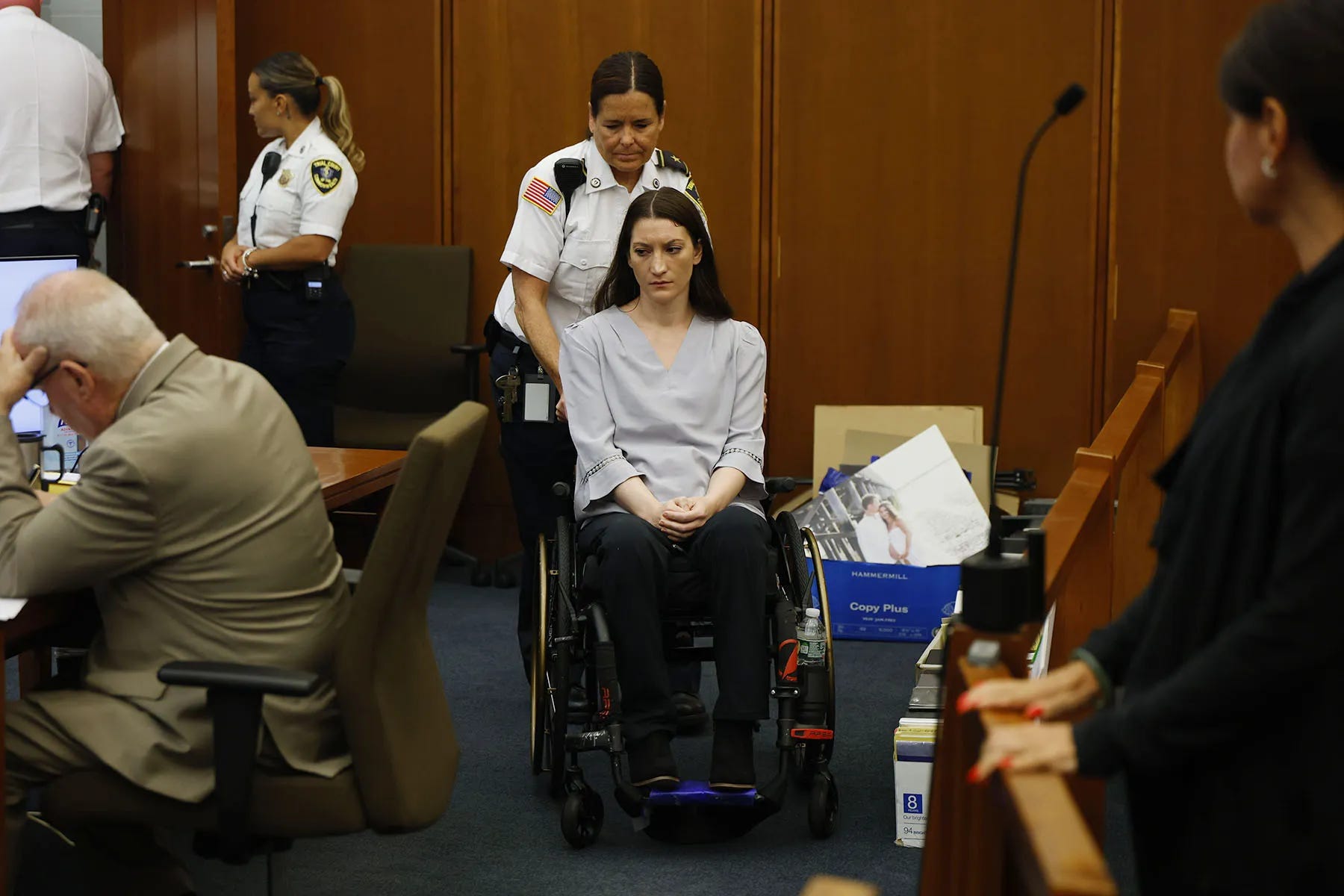
For nearly six weeks, the trial of Lindsay Clancy held an unusual place in the American public conversation. Clancy, a former labor and delivery nurse accused of killing her three children in 2023 before attempting to take her own life, became the subject of intense attention both inside the Massachusetts courthouse and across social media. Women followed the proceedings closely, debated the evidence, defended or condemned Clancy, and, in some cases, used the case as a starting point to talk about experiences of motherhood they had rarely felt comfortable discussing publicly.
The trial ultimately ended without a verdict. After more than 30 hours of deliberation over nearly seven days, jurors were unable to reach a unanimous decision, and a mistrial was declared. Clancy’s defense had argued that she was experiencing postpartum psychosis, a rare and severe psychiatric condition that can cause a person to lose contact with reality after childbirth. Her attorneys pointed to an extensive history of psychiatric treatment in the months before the killings, including numerous appointments with medical and mental-health providers and prescriptions for multiple medications.
The legal question remains extraordinarily difficult: how should the criminal justice system respond when a mother commits an unimaginable act while experiencing a severe psychiatric disorder?
But the public reaction to the case has raised another question that is less comfortable and, perhaps, more revealing: what do we believe a mother is supposed to look like, and what happens when she cannot live up to that image?
That question helps explain why the Clancy case has resonated so strongly with women who have never met her and have no connection to the criminal proceedings. Beneath the arguments about guilt, responsibility and psychiatric evidence is a much larger conversation about the parts of motherhood that rarely make it into public view.
When Motherhood Becomes a Performance


Modern motherhood is often presented as a project of careful management. The right meals, the right activities, the right routines, the right photographs. Social media has made it possible to watch other mothers perform this version of family life every day, often without seeing the exhaustion, resentment, anxiety, or loneliness that exists behind the carefully composed image.
That contrast matters because the transition into motherhood can be psychologically destabilizing even when everything appears to be going well. New parents are expected to feel grateful and fulfilled, while simultaneously adjusting to sleep deprivation, physical recovery, financial pressures, changing relationships and an almost total reorganization of their daily lives. When something goes wrong emotionally, many mothers interpret their distress not as a health problem but as evidence that they themselves are failing.
Maternal mental-health professionals have long pointed to the consequences of that stigma. Mothers experiencing anxiety or depression can carry guilt about having those feelings at all, particularly when they believe that a “good” mother should be happy, patient and endlessly self-sacrificing. The result can be a damaging cycle: the more a woman feels that she is failing at motherhood, the less willing she may be to admit that she needs help.
Postpartum psychosis sits at the most severe end of this spectrum. It is rare, but it is a psychiatric emergency, and people experiencing it may not recognize that their perceptions are distorted. That distinction is important. A person who is hallucinating or experiencing delusions may not simply be choosing to ignore reality; the illness itself can interfere with their ability to understand what is happening to them.
Women who have experienced postpartum psychosis have used social media to describe that reality in their own words. Some accounts shared in connection with the Clancy case describe experiences of hallucination, delusion, and an inability to recognize that something was wrong. For women who have felt isolated after childbirth, these conversations can provide something that formal systems of care sometimes fail to provide: the reassurance that they are not uniquely broken or incapable of motherhood.
That does not make the Clancy case simple, and it should not. Three children died. Acknowledging the seriousness of postpartum psychosis does not require erasing the victims or pretending that mental illness automatically removes questions of responsibility. What it does require is a willingness to distinguish between an explanation for someone’s behavior and an excuse for it.
The distinction is essential because the alternative is dangerous in both directions. If severe postpartum mental illness is treated as an excuse to dismiss the suffering of children and families, the conversation becomes morally shallow. If it is treated as something that should never be discussed when a mother harms her children, women who are becoming seriously ill may become even less likely to recognize their symptoms or seek help.
A System that Often Waits for Women to Ask for Help.
The difficulty is that asking for help assumes a woman knows that she needs it, knows where to find it, and can afford to receive it.
Those assumptions do not always hold.
The original reporting on the Clancy case highlighted several barriers that affect maternal mental-health care, including insurance coverage, gaps in physician training, and inadequate screening and follow-up. Medicaid coverage for pregnancy-related care historically ended only 60 days after childbirth in many circumstances; the American Rescue Plan later gave states the option to extend postpartum coverage to a full year. Yet insurance alone cannot solve a problem if health professionals are not adequately equipped to identify what they are seeing.
There is also a cultural problem that cannot be solved by expanding insurance coverage. Mothers are often expected to absorb enormous amounts of difficulty without making the people around them uncomfortable. Exhaustion is normal. Anxiety is understandable. Feeling overwhelmed is part of the adjustment. These statements can be reassuring when they prevent ordinary struggles from being pathologized, but they can also become dangerous when serious symptoms are dismissed as simply part of being a new mother.
Social media complicates the picture further. It can reinforce unrealistic expectations of motherhood, but it can also offer an antidote. Research cited in the original reporting suggests that mothers who encounter more realistic portrayals of anxiety, loneliness and resentment can feel less isolated and more confident in their own experiences.
That tension is visible in the online response to Clancy’s case. The same internet that has turned the proceedings into true-crime entertainment has also given women a place to talk about maternal mental illness, share experiences and find community. Both realities exist simultaneously.
And that is precisely what makes the public reaction so complicated.
Who Gets Sympathy?
The most uncomfortable dimension of the Clancy conversation concerns race and class.
Clancy’s supporters have framed her story, at least in part, through the lens of a woman who became severely mentally ill after childbirth and whose suffering was not adequately addressed. But critics have asked why this particular framing of maternal distress has attracted so much attention and empathy when women of color who commit crimes are often discussed very differently.
The comparison that has surfaced repeatedly is the case of Latarsha Sanders, a Black Massachusetts mother convicted in 2022 of killing her two sons.
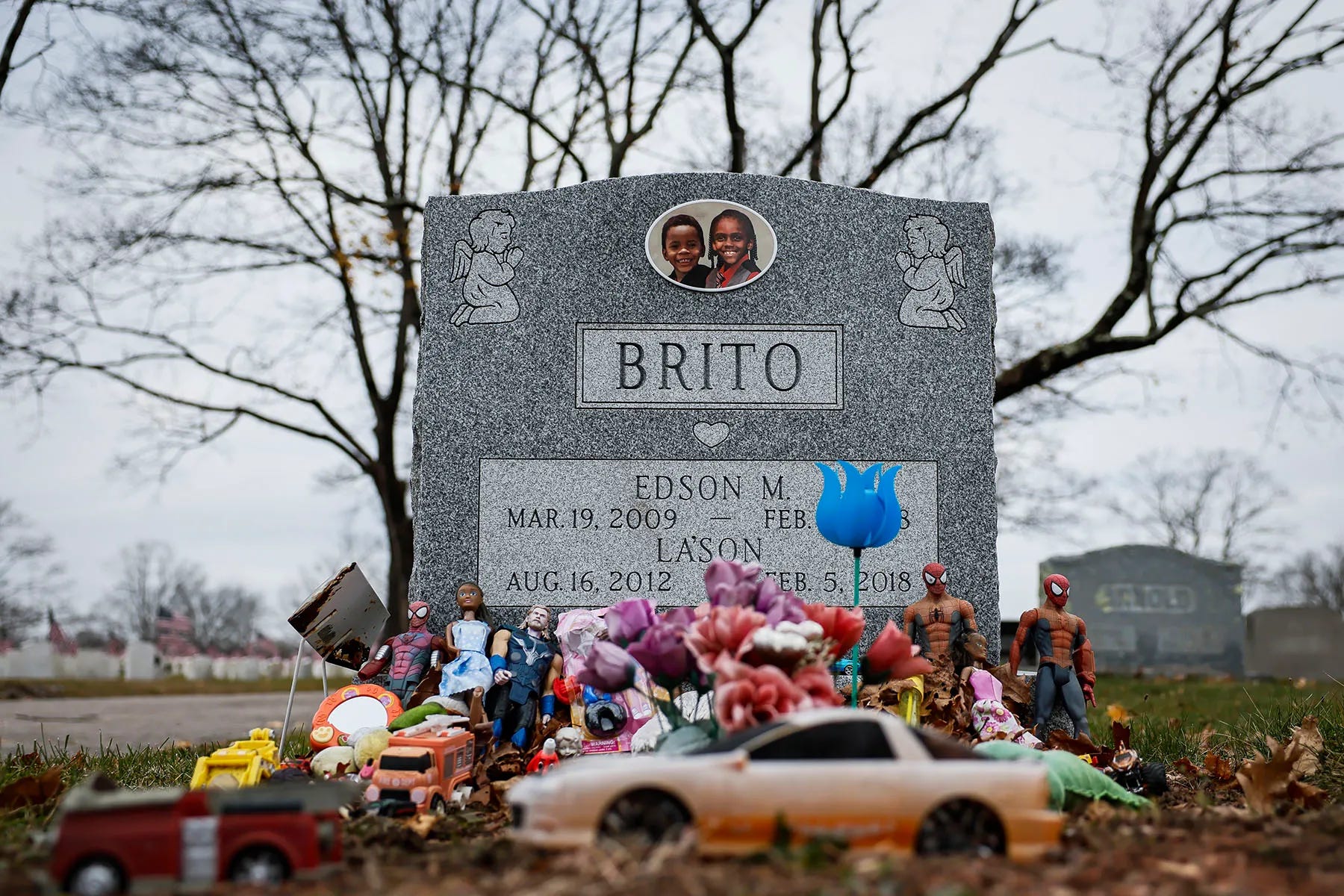
Sanders’s defense similarly argued that she had experienced a psychotic break. The cases are not identical, and neither should be reduced to a simple comparison between two mothers. But the overlap is significant enough to raise questions about how psychiatric evidence, motherhood, and criminal responsibility are interpreted when race enters the picture. Sanders was convicted of two counts of first-degree murder; a later decision by the state’s supreme court ordered a new trial after determining that jurors had not been given access to her complete psychiatric history because some medical records had been excluded.
Researchers who study media portrayals of women and crime have identified a broader pattern. Danielle Slakoff, a criminologist cited in the reporting, argues that women of color who commit crimes are more likely to be portrayed through the language of character — as bad people or bad mothers — while White women are more often given explanations rooted in circumstance, including mental illness.
This does not mean that every person expressing sympathy for Clancy is motivated by racism, or that the psychiatric questions surrounding her case are somehow illegitimate. It means that sympathy itself is not distributed evenly.
Some women are more readily imagined as overwhelmed, ill, vulnerable, or deserving of a second look. Others are more quickly reduced to the worst thing they have done.
Race and class influence those perceptions in ways that can be difficult to see precisely because they are so deeply embedded in cultural ideas about who looks like a “good mother.” The idealized image of motherhood is not culturally neutral. It has historically been associated with particular expectations around whiteness, heterosexuality, able-bodiedness, and economic security.
That is why the Clancy conversation cannot be separated from the question of privilege. The issue is not whether one mother deserves compassion and another does not. The more uncomfortable question is why compassion seems to come more naturally to some mothers than to others.
What We Should Be Talking About Now.
The danger is that the public conversation becomes trapped inside the case itself: the evidence, the courtroom arguments, the online theories, the question of whether there will eventually be another trial.

Those questions matter. But the larger questions may matter for much longer.
What would maternal healthcare look like if women were routinely asked about their mental health with the same seriousness with which they are asked about physical recovery?
What would change if postpartum psychosis were more widely understood, not simply as a tragic explanation that appears after something terrible has happened, but as a medical emergency that families and healthcare professionals knew how to recognize?
And what would happen if mothers could admit that they were frightened, angry, detached, overwhelmed, or unwell without immediately feeling that they had failed the most important test society has given them?
There is another question we should be willing to ask: whose motherhood are we willing to protect?
The attention surrounding Lindsay Clancy has undeniably opened a door into conversations that many women struggle to have. Mothers have spoken publicly about mental illness, isolation and the enormous pressure to appear as though they are coping. Those conversations should not disappear simply because the trial has ended in a mistrial.
But neither should the racial and class inequalities exposed by the response be treated as an uncomfortable footnote.
Perhaps the most useful lesson from the Clancy case is that these issues cannot be separated. Maternal mental health, healthcare access, stigma, motherhood ideals, and racial inequality are not competing explanations for what women experience. They overlap.
A mother can be struggling inside a system that has failed to recognize her illness.
A woman of color can face those same failures while also confronting stereotypes that make her less likely to be perceived as vulnerable.
A society can become more educated about postpartum mental illness while still deciding, consciously or unconsciously, which mothers deserve the benefit of the doubt.
And none of those realities makes the loss of three children any less devastating.
That is precisely why the conversation needs to become larger than Lindsay Clancy.
The most important outcome cannot simply be a verdict. It has to be a deeper understanding of what happens when motherhood is treated as an identity women are expected to perform perfectly rather than a profound life transition that can involve vulnerability, illness, fear, and failure.
The mothers who need help most may not always know how to ask for it. The women who appear to be coping may not be coping at all. And the women society is quickest to judge may be the ones whose stories we have never learned to hear.
If this case has allowed us to listen differently, that opportunity should extend far beyond the courtroom.